Subscription Fatigue Patterns Among Users of Multi Sport Advisory Platforms Across Equine and Team Events
Written by Mara Otto · Aug 1, 2026
Subscription Fatigue Patterns Among Users of Multi Sport Advisory Platforms Across Equine and Team Events
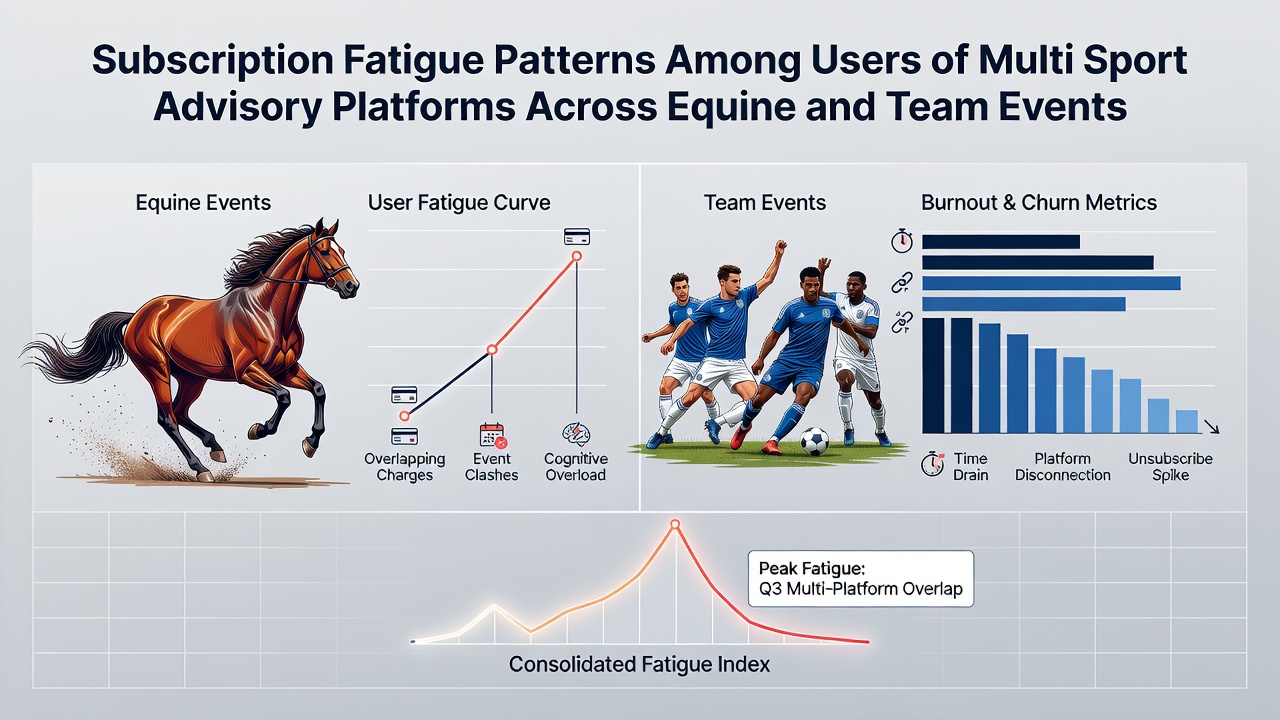
Users of multi-sport advisory platforms that cover equine events alongside team sports have shown distinct patterns of subscription fatigue as of August 2026, with cancellation rates climbing steadily across several major services. Platform operators report that subscribers often maintain access for three to six months before dropping one or more services, particularly when coverage spans horse racing circuits and football or basketball leagues. Data compiled through industry analytics firms indicate that equine-focused modules retain users longer than team event sections, yet combined offerings experience higher churn once overlapping content begins to feel redundant.
Observed Retention Metrics in Cross-Sport Platforms
Retention figures released by platform providers reveal that average subscription lifespan for combined equine and team event advisory tools sits at 4.8 months during the first half of 2026, down from 6.2 months recorded in the same period two years earlier. Those who study user behavior note that subscribers who initially sign up for horse racing daily briefings alongside football match previews tend to reduce active usage after the fourth month, with login frequency dropping by roughly 35 percent. Researchers tracking these patterns across North American and European services find that fatigue accelerates when users receive similar statistical models or form guides for both racing meets and league fixtures, creating a perception of duplicated effort without added insight.
Factors Driving Subscription Reductions
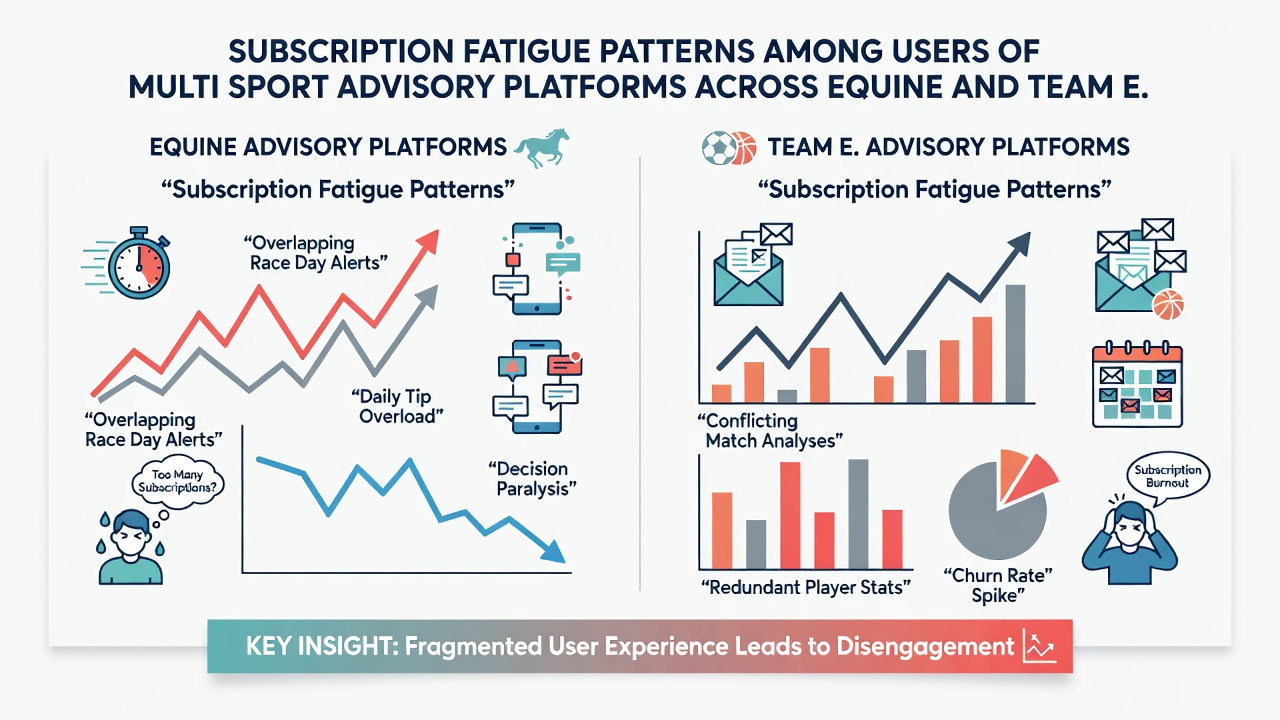
Platform logs show that price increases implemented between January and April 2026 correlated with a 22 percent rise in cancellations among users subscribed to three or more advisory tools. Observers note that participants who follow both provincial flat races and major soccer divisions often cite overlapping notification schedules as a primary reason for trimming subscriptions, since alerts arrive at similar times of day and cover comparable analytical territory. A report issued by the Australian Competition and Consumer Commission highlights how recurring billing structures across entertainment and advisory services contribute to user fatigue when content verticals begin to overlap substantially. Users who maintain separate equine and team event accounts rather than bundled plans demonstrate lower overall churn, suggesting that modular access helps mitigate the sense of paying repeatedly for parallel information streams.
Regional Variations in User Behavior
European platform data collected through the first eight months of 2026 indicate higher tolerance for multiple subscriptions among users focused on continental football leagues compared with those tracking UK and Irish horse racing calendars. In contrast, North American services report faster fatigue among subscribers who combine thoroughbred racing circuits with NBA or NFL advisory content, with average active months falling to 3.9 by mid-year. Those tracking these trends point to differences in seasonal overlap, since equine events run year-round in some regions while team sport seasons create concentrated periods of high content volume. Platform operators respond by introducing tiered access that allows users to pause specific sport modules without canceling entire accounts, a tactic that has slowed cancellation velocity in several documented cases.
Content Overlap and User Switching Patterns
Analysis of account activity shows that subscribers frequently migrate between platforms rather than abandoning advisory services altogether, with roughly 18 percent of users who cancel one equine-team event bundle signing up for a competitor within 30 days. Researchers examining these movements find that users seek fresher data visualizations or more granular live updates for specific events such as turf sprints or basketball playoff runs. When advisory content begins to mirror across providers, the incentive to maintain multiple subscriptions diminishes, leading to consolidation around one or two preferred sources. Industry reports from Canadian market research groups document similar consolidation trends in other subscription-heavy sectors, where users prioritize depth over breadth once initial enthusiasm wanes.
Platform Adjustments Observed Through Mid-2026
Several major multi-sport advisory services introduced usage-based incentives during the summer of 2026, including credit systems that reward consistent engagement with equine or team event modules. These adjustments appear after internal metrics revealed that passive subscribers, those logging in fewer than twice weekly, account for the largest share of cancellations. Platform teams have also begun segmenting equine and team event notifications more distinctly, reducing simultaneous delivery that previously contributed to perceived overload. Data from these revised delivery schedules show modest improvements in retention among users who previously managed three or more concurrent subscriptions.
Conclusion
Subscription fatigue among users of multi-sport advisory platforms continues to shape retention strategies across equine and team event verticals as of August 2026. Platform operators track cancellation triggers tied to content overlap, billing frequency, and regional seasonal patterns, then adjust access models accordingly. Users who consolidate accounts or select modular options demonstrate longer engagement periods according to available analytics. These observed behaviors reflect broader trends in recurring service models where cross-category offerings compete for sustained attention.