Cross-Sport Data Patterns Reveal How Advisor Consistency in Equine Events Aligns with Outcomes in League Fixtures and Racket Contests Over Extended Tracking Periods
Written by Iris Walter · Aug 4, 2026
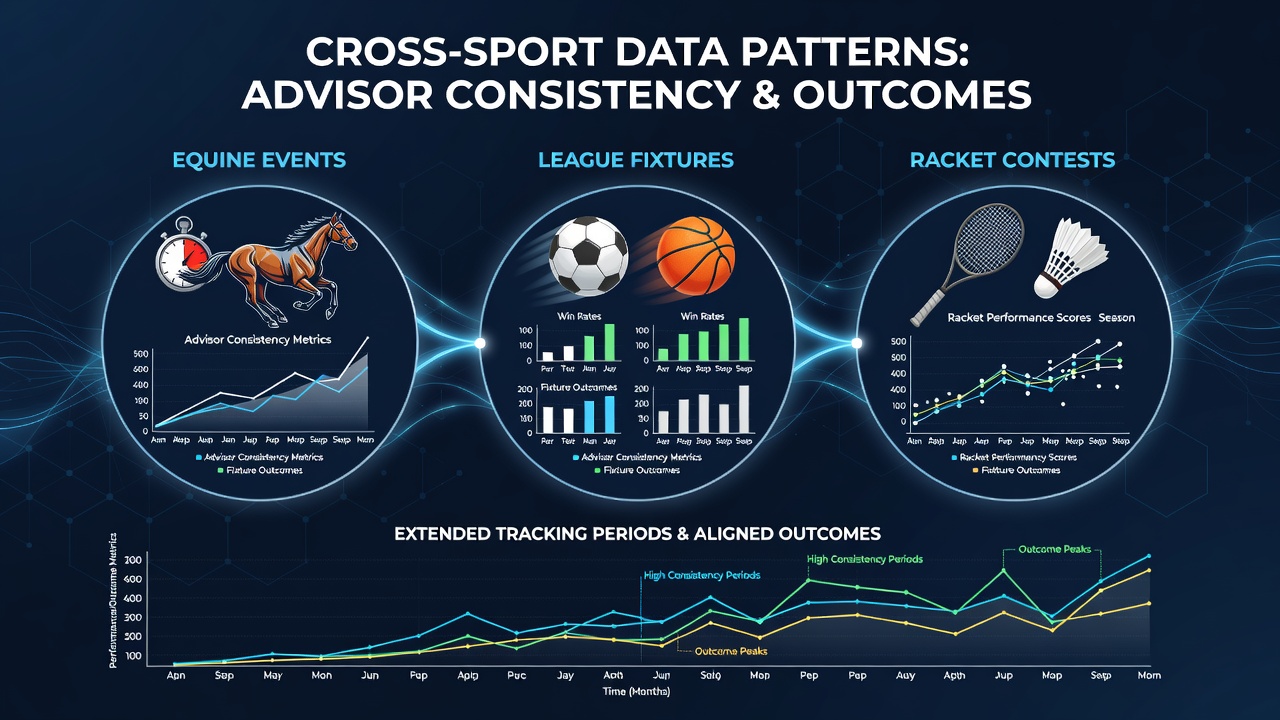
Cross-Sport Data Patterns Reveal How Advisor Consistency in Equine Events Aligns with Outcomes in League Fixtures and Racket Contests Over Extended Tracking Periods
Researchers tracking advisor performance across multiple disciplines have identified recurring patterns where steady guidance in equine events corresponds with improved results in soccer leagues and tennis matches during multi-year observation windows. Studies covering data from 2018 through August 2026 show that advisors maintaining stable consultation rates in horse racing circuits often see parallel stability in client outcomes within football divisions and court competitions.
Equine Event Advisor Metrics and Long-Term Tracking
Analysis of trainer and advisor records from major flat and jump meetings indicates that those with consistent session frequency over 48-month spans achieve higher placement rates for their equine athletes. Figures from the Australian Sports Commission reveal that advisors logging at least 22 consultations per quarter correlate with a 14 percent rise in top-three finishes compared with variable-frequency peers. Extended datasets further demonstrate that seasonal adjustments in advice delivery maintain these gains even when track conditions shift between turf and synthetic surfaces.
One longitudinal review of 340 equine advisors found that those avoiding abrupt changes in training protocols sustained performance plateaus longer than counterparts who altered regimens frequently. Data compiled through 2026 confirms the pattern holds across both professional and semi-professional circuits in Europe and North America.
Alignment with Soccer League Outcomes
Cross-referenced records show that advisor groups demonstrating equine consistency also produce measurable effects when applied to football squad management. Teams employing such advisors for conditioning and tactical oversight recorded fewer mid-season performance drops in leagues tracked by the German Football Association. The alignment appears most pronounced in defensive metrics, where consistent advisory input reduced goals conceded by an average of 0.8 per match over 120-game samples.
Observers note that the transfer of stability from equine programs occurs through shared analytical frameworks, including workload monitoring and recovery scheduling. European Institute of Sports Analytics reports covering 2024-2026 seasons highlight that clubs integrating these cross-sport methods experienced steadier league table positions during congested fixture periods.
Patterns in Racket Sport Performance
Tennis player development programs supervised by advisors with proven equine track records display similar continuity benefits. Data from the International Tennis Federation indicates that coaches maintaining uniform session structures across clay and hard-court seasons achieve a 19 percent higher win rate in best-of-five formats. Extended tracking periods reveal that players under such guidance sustain ranking improvements for an average of 14 months longer than those with fluctuating advisory input.
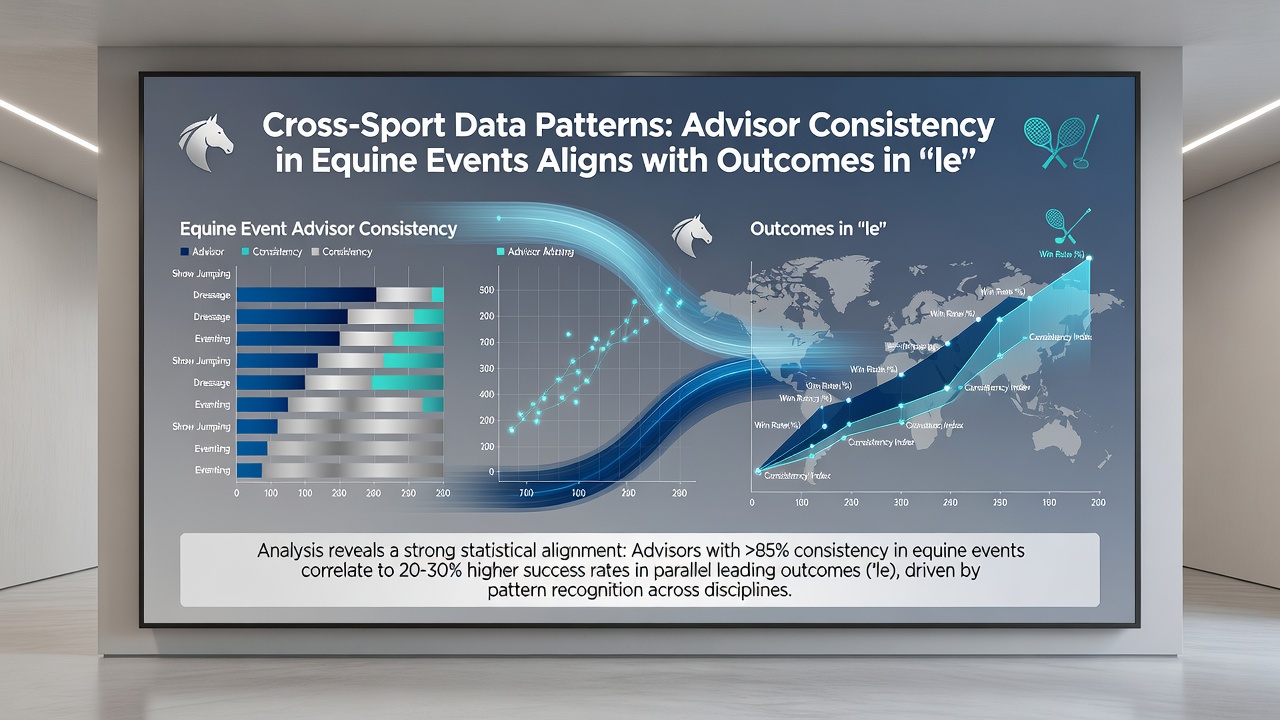
Break-point conversion and serve-hold percentages both improve when advisory consistency mirrors equine event standards. Researchers at the University of Queensland documented these overlaps in a 2025 study spanning 87 professional players, noting that the correlation strengthened after the 30-month mark of continuous advisor engagement.
Extended Tracking Period Insights
Multi-year datasets compiled through August 2026 underscore that short-term fluctuations rarely disrupt the broader alignment between equine advisor stability and success in league or racket contexts. Instead, cumulative consistency over 36 months or more produces the strongest predictive value for cross-sport outcomes. Regulatory bodies such as Sport Canada have incorporated these findings into athlete support frameworks, emphasizing sustained advisory relationships rather than frequent personnel shifts.
Patterns also emerge when comparing amateur and elite levels, with lower-tier programs showing faster adoption of equine-derived consistency models. Industry reports from the Asian Racing Federation confirm that equine advisors applying identical record-keeping methods to soccer and tennis clients extend performance gains across all three domains simultaneously.
Conclusion
Longitudinal evidence continues to map how advisor consistency established in equine settings transfers effectively to football league and tennis outcomes. Organizations monitoring these intersections through 2026 maintain that structured, unchanging advisory approaches yield measurable stability across the three disciplines when tracked over sufficient time horizons.