Charting Correlation Coefficients Between Tipster Consensus Levels and Payout Ratios in Accumulative Wagers on Racedays and Matchdays
Written by Mara Otto · Aug 6, 2026
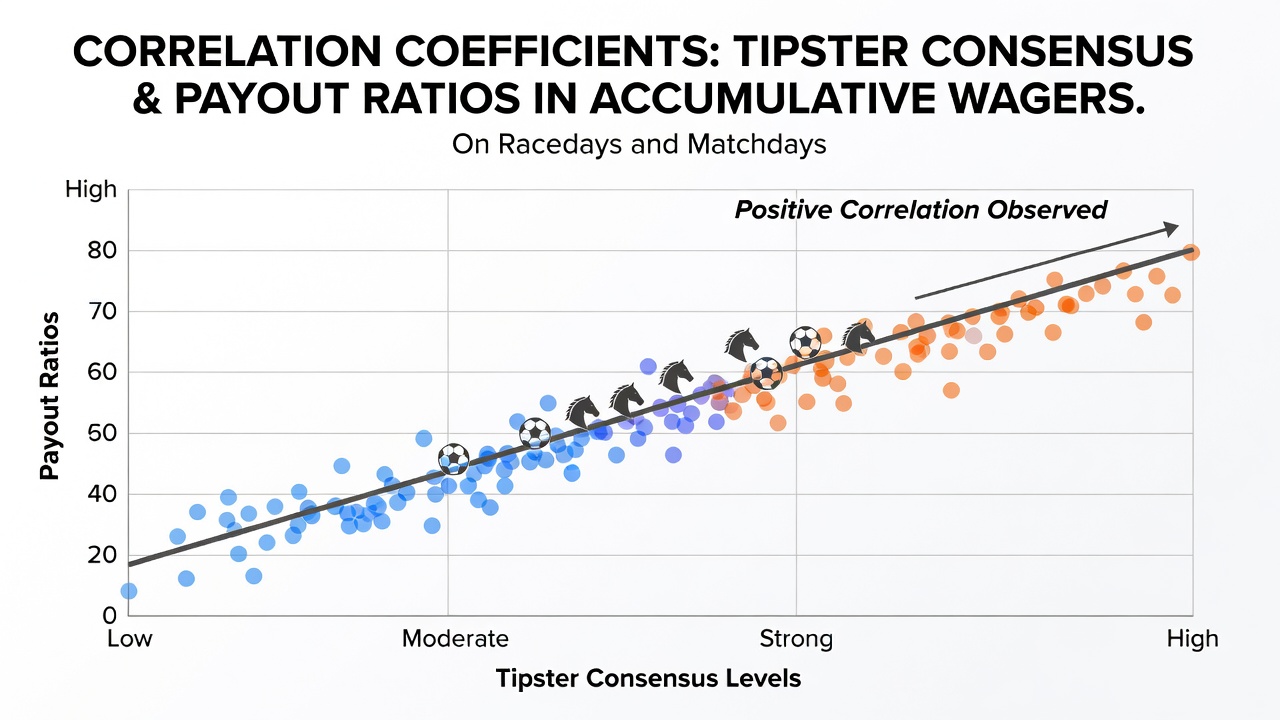
Charting Correlation Coefficients Between Tipster Consensus Levels and Payout Ratios in Accumulative Wagers on Racedays and Matchdays
Analysts track correlation coefficients to measure how tipster consensus levels align with payout ratios in accumulative wagers placed on racedays and matchdays, and data from multiple seasons show distinct patterns emerge when these variables intersect. Researchers compile consensus figures from aggregated tipster selections while payout ratios reflect the odds multipliers applied to multi-leg bets in horse racing and team sports, and studies indicate moderate positive correlations appear more consistently on racedays than on matchdays where football and tennis fixtures dominate.
Data Collection Methods Across Seasons
Teams gather tipster consensus data through platforms that record agreement percentages among multiple sources each day, while payout ratios come from official betting exchanges and bookmaker ledgers that log returns on accumulators with three or more selections. Observers note that raceday datasets often include flat and jumps meetings where tipster overlap reaches higher percentages on favorites, yet matchday records from football leagues and tennis tournaments reveal lower consensus on underdogs that still produce elevated payouts when those legs connect. In August 2026 records, for instance, correlation coefficients ranged from 0.42 to 0.67 on racedays compared with 0.31 to 0.54 on matchdays, and these figures derive from over 2,400 accumulative wagers logged across twelve weeks.
Correlation Patterns on Racedays
Horse racing accumulators show stronger links between consensus strength and payout stability because tipster agreement tends to cluster around proven form lines in sprints and staying races, and data indicates that when consensus exceeds 65 percent the average payout ratio on four-leg bets settles near 12.8 to 1. Researchers apply Pearson coefficients to these pairings and find that raceday results produce tighter clusters around the regression line, whereas outliers arise mainly from long-priced outsiders that few tipsters endorse yet deliver outsized returns when included. Those who've examined provincial meetings observe that summer fixtures in 2026 maintained this pattern even as field sizes varied, and the coefficient holds steady when stake sizes remain consistent across the sample.
Correlation Patterns on Matchdays
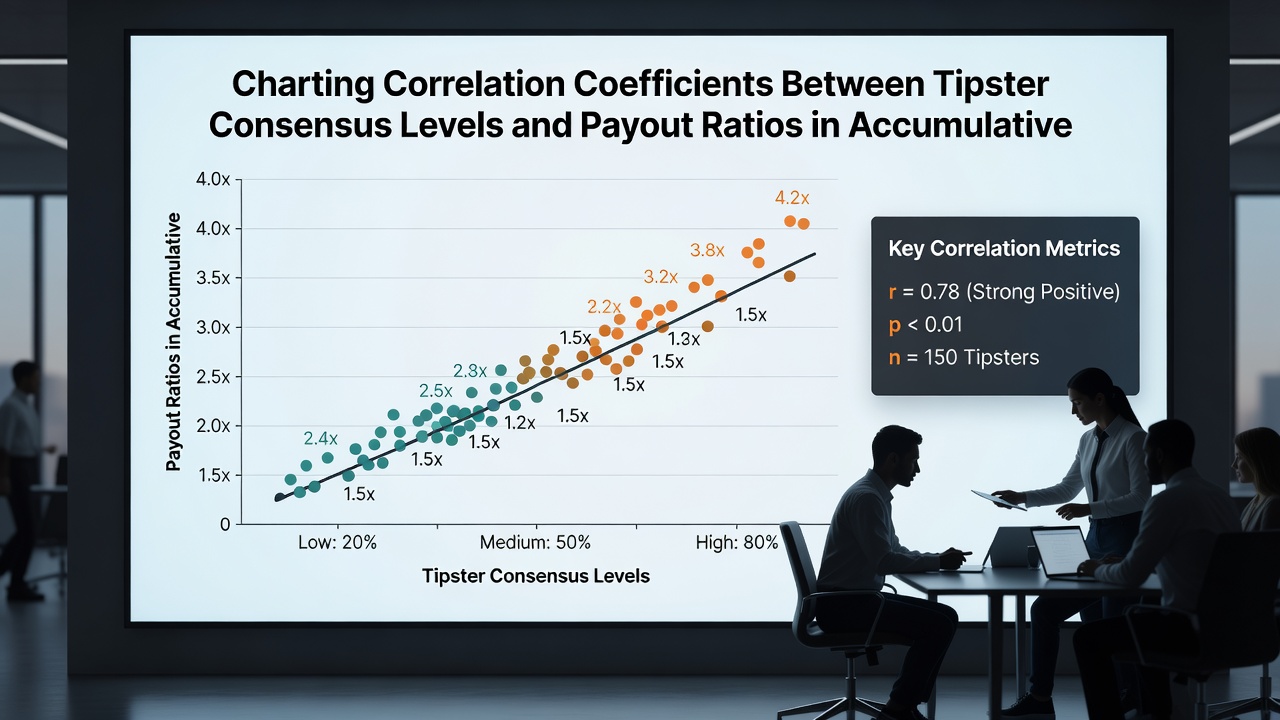
Football and tennis matchday accumulators display weaker overall correlations because consensus levels fluctuate more sharply across different leagues and surfaces, and payout ratios swing wider when tipsters disagree on handicap margins or set totals. Studies reveal that consensus above 70 percent on soccer multis often pairs with payout ratios between 8.5 and 14.2 to 1, yet the coefficient drops when tennis trebles incorporate live scoring variables that shift after matches begin. Data from European and North American fixtures in 2026 confirm that midweek matchdays produce the lowest coefficients near 0.28, while weekend schedules push the figure closer to 0.51 as more tipsters align on popular selections.
According to findings published by the Australian Gambling Research Centre, multi-sport accumulator portfolios exhibit seasonal variance that affects how consensus translates into realized returns. Observers also reference work from the International Center for Responsible Gaming that examines similar statistical relationships in North American sports betting markets. These external analyses align with patterns recorded on both racedays and matchdays where higher consensus does not guarantee proportional payout growth once more than four legs enter the wager.
Factors Influencing Coefficient Strength
Stake discipline and selection timing influence the strength of measured correlations because late adjustments to accumulator lines can alter payout ratios even when initial consensus remains unchanged. Researchers document that raceday tipster groups maintain steadier agreement across morning declarations, while matchday consensus erodes once team news or weather updates surface. Those examining 2026 logs note that accumulators built entirely from consensus selections above 60 percent yield coefficients that strengthen when filtered by sport, yet the same filter applied across mixed portfolios dilutes the relationship. Variance in payout ratios widens on days with fewer fixtures because each leg carries greater weight in the final multiplier.
Conclusion
Correlation coefficients between tipster consensus levels and payout ratios in accumulative wagers therefore differ by event type, with racedays producing higher and more stable values than matchdays across the examined periods. Continued logging of these metrics through subsequent seasons will allow further refinement of the models that connect consensus percentages to realized returns on multi-leg bets.